





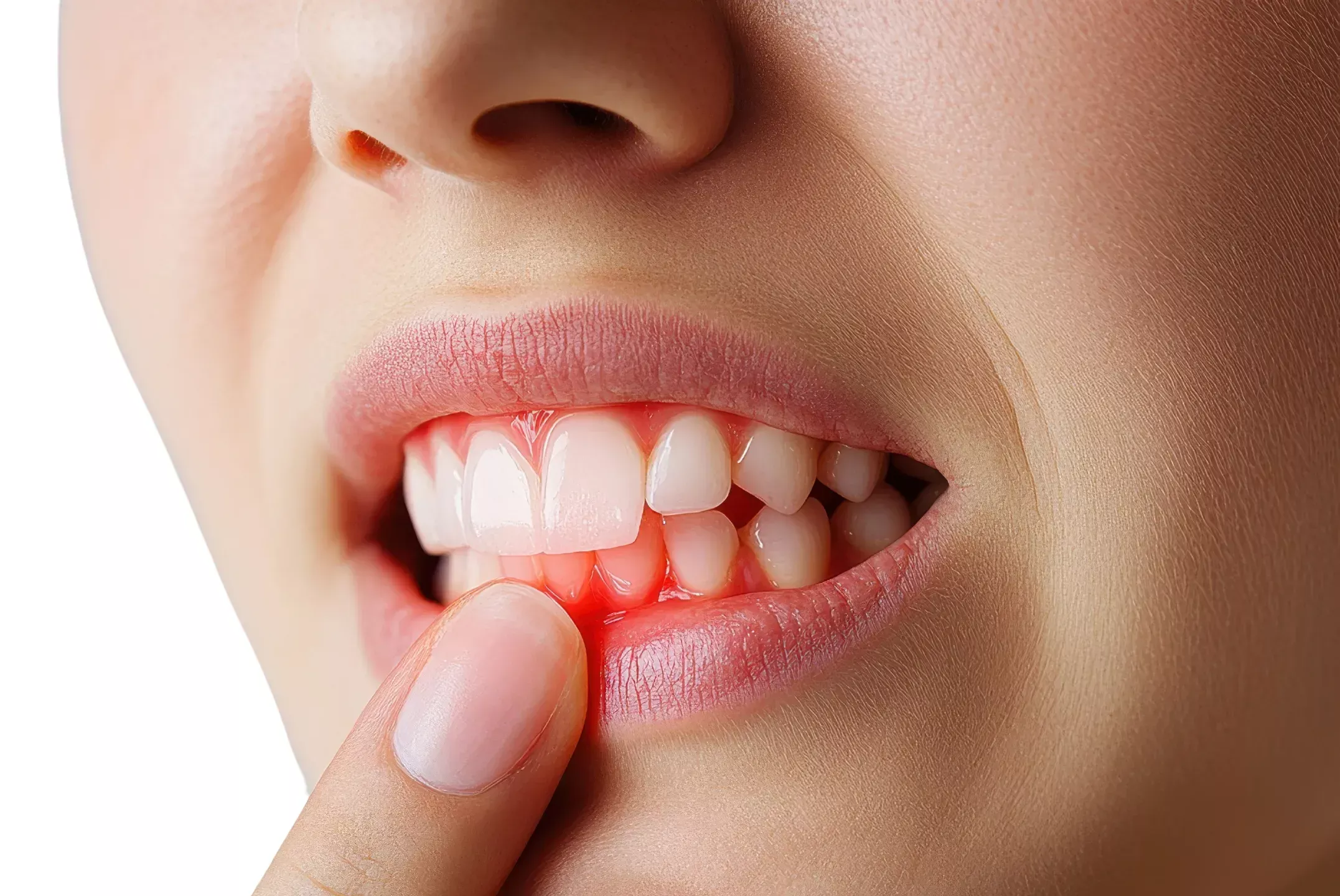

Blood in the sink after you brush is your mouth telling you something. Most bleeding gums come from plaque buildup along the gum line, and gums that bleed only from gingivitis can heal in about 1 to 2 weeks of careful daily brushing and flossing. That is the good news. The part people miss is that bleeding which keeps going past two weeks, or shows up on its own, needs a dentist’s eyes on it.
Healthy gums do not bleed. They are pale pink, firm, and they stay put when you press them. So when you see pink on the floss or a red tinge in the toothpaste foam, treat it as an early warning rather than a normal part of cleaning your teeth.
Gum bleeding is also the most common sign of gum disease, and it shows up in a surprising number of people.
By the end of this you will know what causes your gums to bleed, what you can fix at home this week, and which symptoms mean you should stop waiting and book an appointment.
Why Do Gums Bleed When Brushing or Flossing?
Plaque along the gum line is the number one reason gums bleed during brushing and flossing. Plaque is a soft, sticky film of bacteria that forms on your teeth every few hours. Left alone, it irritates the gum tissue until the small blood vessels there swell and break open easily.
Cleveland Clinic explains that the main reason gums bleed when you floss is plaque, bacteria and tartar. Within a couple of days, plaque hardens into tartar (also called calculus), and tartar cannot be brushed off. Only dental cleaning removes it.
Here is how that shows up in your mouth:
- Inflamed gums: red, puffy, and tender instead of firm and pale pink
- Bleeding on contact: blood appears the moment bristles or floss touch the gum edge
- Gingivitis: the earliest, reversible stage of gum disease caused by this plaque irritation
Two other causes are easy to mistake for disease.
Aggressive brushing. Scrubbing hard with a stiff brush scrapes the gum tissue. If your bristles splay out within a month, you are pressing far too hard.
A new flossing habit. Gums that have not been flossed in months bleed for the first several days, then settle down as the inflammation clears. Keep going gently.
Bleeding around one tooth only is a different signal. That points to something trapped, a cracked filling, a rough crown edge, or a local infection, and it will not resolve with better brushing alone. Poor oral hygiene affects the whole mouth; one stubborn spot has a local cause.
Could It Be Gingivitis or Periodontitis?
Bleeding with no loose teeth and no gum shrinkage points to gingivitis, which reverses with proper cleaning. Bleeding along with receding gums, deep pockets, pus, or shifting teeth points to periodontitis, the advanced form of gum disease.
The difference comes down to what the infection has reached. Gingivitis irritates only the gum tissue. Periodontitis inflames the periodontium, the gum and the bone that hold your teeth in place, and lost bone does not grow back.
| Sign | Gingivitis | Periodontitis |
| Bleeding gums | Yes | Yes, often heavier |
| Bone loss | No | Yes |
| Receding gums | Rare | Common |
| Loose teeth or tooth loss | No | Yes |
| Pus between gum and tooth | No | Possible |
| Reversible | Yes | Managed, not reversed |
Bad breath that returns hours after brushing is another clue. So is a bad taste, gums pulling away so teeth look longer, and new gaps between teeth.
The same bacteria that drive gum disease also feed cavities and tooth decay, which is why both problems often appear at the same visit.
Gingivitis responds to a professional cleaning and better home care. Periodontitis needs deeper treatment, and a dentist may refer you to a periodontist for gum disease treatment when pockets are deep or bone loss has started. Catching it at the gingivitis stage saves you that path entirely.
Other Health Conditions and Factors That Can Cause Gum Bleeding
When your brushing is solid and your gums still bleed, look at hormones, medicines, and general health. Gum tissue reacts to changes in the whole body, which is why bleeding sometimes shows up before any other symptom.
Hormonal changes. Puberty, menstruation, pregnancy, and menopause all shift blood flow to the gums. Pregnancy gingivitis is common and usually settles after delivery with good cleaning. Anyone pregnant should keep up dental visits, alongside regular pregnancy and gynecology care.
Diabetes. High blood sugar makes it harder for your body to fight germs. Diabetes raises your risk of infections that cause bleeding, swollen gums and gum disease.
Blood disorders and bleeding disorders. Clotting problems like hemophilia, and less commonly leukemia, can show up first as gums that bleed with little provocation.
Blood thinners. Warfarin, aspirin, and other blood-thinning medications make normal gum irritation bleed more and stop more slowly. Gingival bleeding is an uncommon drug side effect, but real. Never stop a prescribed blood thinner on your own; tell your dentist you take one.
Vitamin deficiencies. Severe vitamin C deficiency (scurvy) causes spongy, bleeding gums. Vitamin K deficiency affects clotting. Both are rare on a normal diet.
Smoking and tobacco use starve gum tissue of blood supply and hide bleeding while damage continues. Stress, dry mouth, and poorly fitting dentures or dental appliances rubbing the gum line add to the load.
How to Stop Bleeding Gums and Protect Your Gum Health
Start by brushing twice a day for two minutes with a soft-bristled toothbrush and fluoride toothpaste, and floss once a day.
To stop bleeding right now, press clean gauze against the spot with gentle pressure, or hold a cold compress on the outside of your lip for 10 to 15 minutes.
Then fix the daily routine:
- Switch to a soft-bristle brush. Medium and hard bristles damage gums. An electric toothbrush with a pressure sensor helps if you push too hard; a manual toothbrush works fine when your grip is light.
- Angle the bristles at 45 degrees toward the gum line and use small circles. No scrubbing back and forth.
- Floss gently every day. Curve the floss around each tooth in a C shape and slide it under the gum edge. Do not snap it down.
- Try a water flosser if floss is awkward, you have braces, or bridgework makes string floss hard to thread.
- Rinse with an antibacterial mouthwash after brushing to cut bacteria your brush missed. Antiseptic and antimicrobial rinses both reduce plaque.
- Drink water through the day and cut back on sugary drinks and snacks that feed plaque bacteria.
Stop smoking. It is the single biggest change most smokers can make for their gums.
Give the routine a full two weeks before you judge it. Bleeding that improves steadily means plaque was the problem. Bleeding that stays the same or worsens means tartar is sitting below the gum line, where only a dentist can reach it.
When to See a Dentist for Persistent or Severe Symptoms
Book a dental appointment if bleeding lasts more than two weeks despite good brushing and flossing. That timeline separates ordinary irritation from gum disease that needs professional treatment.
Get seen sooner if you notice any of these:
- Gums bleed on their own, while eating, or overnight on your pillow
- Pus between the gum and tooth, or a swollen lump on the gum
- Teeth feel loose, shift position, or your bite feels different
- Gums pulling back so teeth look longer
- Bad breath or a metallic taste that keeps returning
- Heavy bleeding while you take blood thinners
- Fever with gum swelling and pain
- Bleeding elsewhere too, like frequent nosebleeds or easy bruising
That last one matters because gingival bleeding sometimes signals a blood or clotting problem instead of a dental one, and it needs a medical workup alongside dental care.
What treatment looks like: a routine dental cleaning removes plaque and tartar above the gum line. When pockets have formed, the dentist performs scaling and root planing, a deep cleaning that scrapes tartar off the root surfaces and smooths them so gums can reattach.
Antibiotics, as a gel placed in the pocket or tablets, may be added when infection is active. Deep pockets or bone loss lead to a referral to a periodontist. Untreated, periodontitis ends in tooth loss.
Two dental checkups a year catch problems while they are still reversible. If bleeding gums come with fever, unexplained bruising, or bleeding that will not stop, come to Primax Hospital in Sonipat for evaluation. Our team can also connect you with the right specialist doctors when the cause sits beyond your mouth.
Frequently Asked Questions
Is it normal for gums to bleed when brushing?
No. Healthy gums do not bleed when you brush. Bleeding when brushing signals plaque irritation or early gum disease, and while it can also come from brushing too hard, it always deserves attention instead of being ignored.
How long does it take to stop bleeding gums?
Gums irritated by plaque stop bleeding within 1 to 2 weeks of twice-daily brushing with a soft brush and daily flossing. If bleeding has not clearly improved by then, tartar below the gum line is the likely reason, and only a professional cleaning removes it.
Can vitamin deficiencies cause bleeding gums?
Yes, though it is uncommon. Severe vitamin C deficiency (scurvy) causes soft, bleeding gums, and low vitamin K affects blood clotting. A normal diet with fruits and vegetables prevents both, so plaque remains the far more likely cause.
Why do my gums bleed during pregnancy?
Hormonal changes in pregnancy increase blood flow to the gums and make them react more strongly to plaque, a condition called pregnancy gingivitis. Keep brushing and flossing gently, and keep your dental checkups; the bleeding settles after delivery in most cases.
Should I stop flossing if my gums bleed?
No. Keep flossing gently. Gums that have not been flossed regularly bleed for the first few days and then stop as the inflammation clears, so stopping lets plaque build right back up.
Bleeding gums that persist past two weeks need a professional look. Visit Primax Hospital, the best hospital in Sonipat at Bahalgarh Road, Sector-4, Sonipat-131001, Haryana. Call +91 96664 60009 to book your appointment.

