






A slipped disc happens when the soft center of a spinal disc pushes out through a tear in its tough outer ring and presses on nearby nerves. Doctors call it a herniated disc or a herniated disk. The pain can show up as back pain, lower back pain, or neck pain, and it often travels down an arm or a leg.
Most people with a slipped disc get better in 6 to 12 weeks with rest, gentle movement, physical therapy, and simple pain relief, and surgery is needed only when nerve symptoms stay severe or keep getting worse. Research on lumbar disc herniation shows that over 85 to 90% of patients with an acute herniated disc feel relief within 6 to 12 weeks even without treatment.
That said, some signs should never wait. Sudden weakness in a leg, trouble controlling your bladder or bowels, or numbness around your groin needs emergency care the same day.
Read on and you will be able to tell a routine disc flare-up from a red-flag emergency, know which tests your doctor may order, and pick the treatment steps that fit your stage of recovery.
What Happens When a Spinal Disc Herniates?
Your spine is a stack of bones called vertebrae, and between each pair sits a cushion called an intervertebral disc. Each spinal disk has a jelly-like center (the nucleus, or nucleus pulposus) held inside a tough outer ring (the annulus).
A disc herniation happens when that outer ring cracks or weakens and some of the nucleus pushes out. You will hear the same event called a prolapsed disc, a ruptured disc, or a slipped disc. Nothing has slipped out of place, which is why the name confuses people.
A disc bulge is a step earlier. The disc spreads outward like a tire with low pressure, but the outer ring is still intact. A bulging disk can press on tissue too, though it is less likely to cause sharp nerve pain.
Age plays a big role here. With disc degeneration, discs lose water and height, pressure in the nucleus drops and stress builds in the annulus, which makes tearing easier.
Trouble starts when the pushed-out material enters the spinal canal, the tunnel that protects the spinal cord and the spinal nerves. Pressure and chemical irritation on the nerve roots leaving the spinal column cause most of the pain people feel.
Location decides the symptoms. Material pressing on a nerve root in the lower back sends pain down the leg. The same thing in the neck sends pain into the shoulder or hand.
Some herniations cause nothing at all. If the material stays clear of nerves, you can carry a disc herniation on a scan and feel fine.
What Symptoms Can a Herniated Disc Cause?
Your symptoms depend on where the disc sits and which nerve it touches. Most herniations occur in the lumbar spine of the lower back, with 95% of cases affecting that region, so leg pain is the classic complaint.
Lower back (lumbar spine): sharp or burning pain in the back that shoots into the buttock, thigh, calf, or foot. When it follows the path of the sciatic nerve, it is called sciatica. Coughing, sneezing, or sitting for long stretches makes it worse.
Neck (cervical spine): pain in the neck or between the shoulder blades that runs down the arm into the hand. Turning your head to one side often triggers it.
Mid-back (thoracic spine): far less common, with pain that may wrap around the ribcage.
Nerve pressure adds symptoms beyond pain:
- Tingling or a pins-and-needles feeling in one limb
- Numbness in a patch of skin, a foot, or the fingers
- Muscle weakness, such as a foot that slaps when walking or a weak grip
- Loss of reflexes on one side
Weakness deserves more attention than pain. Pain hurts; weakness suggests nerve damage that a doctor should check within days.
Cauda equina syndrome is the emergency. A large herniation squeezes the bundle of nerves at the base of the spine and causes numbness around the groin and inner thighs, loss of bladder or bowel control, or weakness in both legs. Go straight to an emergency department, not a clinic appointment next week. Our neurosurgery team handles these cases as surgical emergencies.
What Causes Disc Problems and Who Is at Risk?
Aging and everyday wear and tear cause most disc problems. Johns Hopkins Medicine notes that lumbar disk disease usually results from aging and the normal breakdown inside the disk, with injury sometimes tipping a weakened disc over the edge.
Many people cannot point to a single moment when it happened. Others remember one bad lift.
Common risk factors:
| Risk factor | Why it raises risk |
| Age 30 to 50 | Discs dry out and the outer ring weakens |
| Heavy lifting | Load transfers to the disc when you lift with your back |
| Lifting while twisting | Combines pressure and shear on the annulus |
| Physically demanding work | Repeated bending, pulling, and vibration |
| Poor posture and long sitting | Steady forward pressure on lumbar discs |
| Overweight or obesity | Extra load on the lower spine |
| Smoking | Reduces blood supply and speeds disc degeneration |
| Family history | Inherited differences in disc structure |
What helps in practice:
- Lift heavy objects with bent knees and the load close to your chest, and turn your feet instead of twisting your spine
- Reach and hold a healthy weight; steady weight loss takes real pressure off lumbar discs
- Keep good posture at a desk, with hips and knees level and screens at eye height
- Stand up and walk for two minutes every half hour of sitting
- Stop smoking
Strong core and hip muscles share load with your spine. Walking, swimming, and basic strength work do more for prevention than any belt or cushion.
How Is a Slipped Disc Diagnosed?
A careful physical examination gives the diagnosis in most cases, and imaging confirms it only when it will change your treatment. Your doctor checks reflexes, muscle strength, and skin sensation, then maps which nerve root matches your symptoms.
A common bedside test is the straight leg raise, where lifting your straight leg reproduces the leg pain of a lumbar disc herniation. Neck cases get similar tests for arm symptoms.
Imaging options:
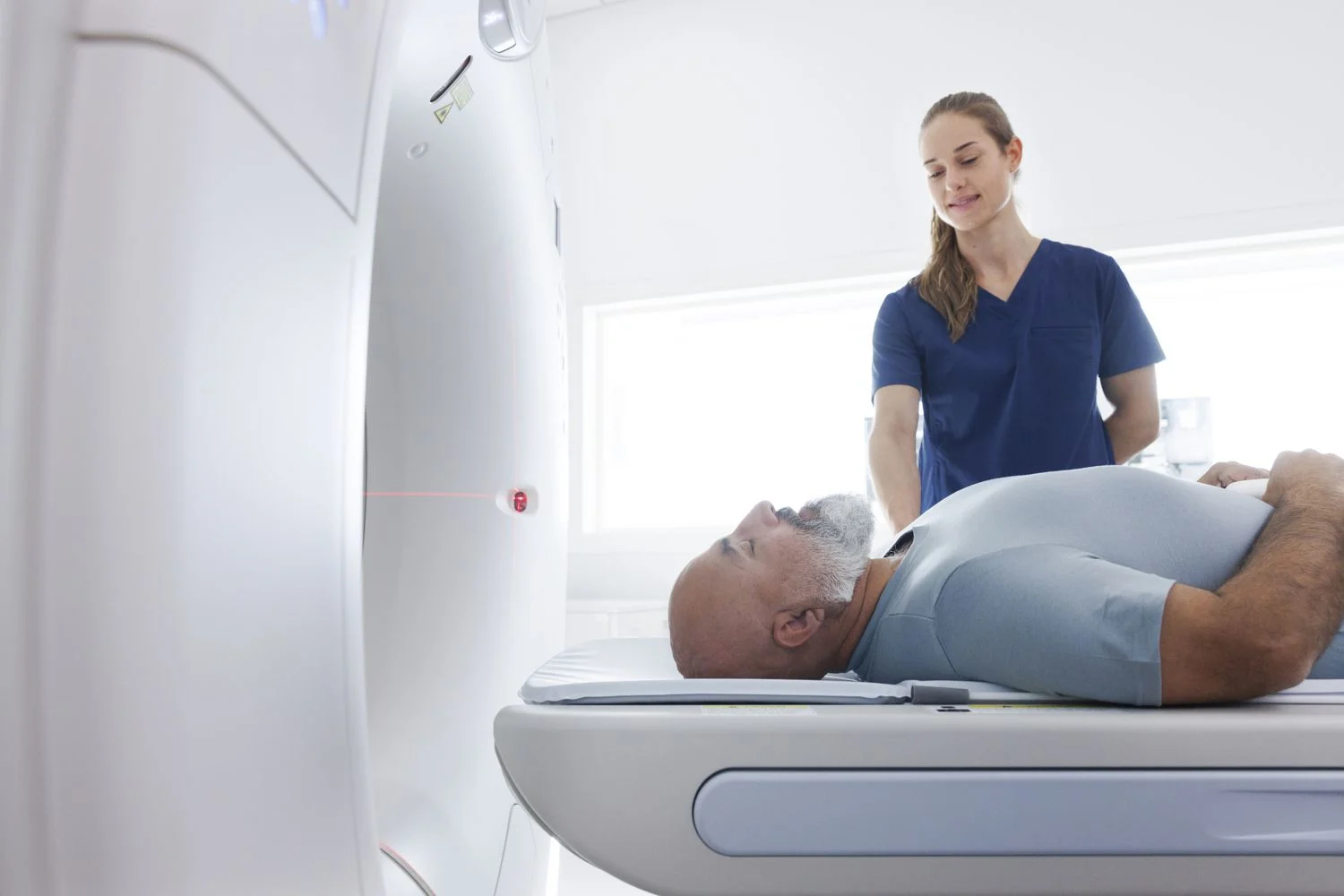
- MRI scan: the best test for soft tissue. An MRI shows the disc, the nerve roots, and exactly where the pressure sits.
- X-ray: does not show discs, but rules out fractures, alignment problems, and bone disease.
- CT scan: useful when MRI cannot be done, and better for bone detail.
- Myelogram: dye injected into the spinal canal followed by CT, used when MRI is unclear or when several levels look involved.
- Nerve conduction studies: help sort nerve root problems from nerve trouble elsewhere in the limb.
One caution matters here. Family physicians point out that radiographic findings of lumbar disk herniation are common in patients without back pain, so a scan finding on its own does not explain your pain.
Doctors order urgent imaging for red flags: cauda equina signs, progressive weakness, fever, unexplained weight loss, cancer history, or major trauma.
For routine back pain without nerve symptoms, waiting four to six weeks before scanning is standard practice and avoids treatment based on findings that do not match your symptoms. The orthopedics department at Primax Hospital follows that same stepwise approach.
Treatment, Recovery, and When to Seek Urgent Care
Start with conservative treatment, because nonsurgical treatment resolves the large majority of herniated discs. A day or two of rest helps at the worst of a flare-up, then movement becomes the medicine.
What to do in the first two weeks:
- Keep moving with short, frequent walks instead of bed rest
- Apply ice for the first 48 hours, then heat for muscle spasm
- Avoid heavy lifting, deep bending, and long car rides
- Change position every 20 to 30 minutes
Exercise and hands-on care: gentle exercise, daily stretching, and swimming rebuild tolerance without loading the disc. Physical therapy teaches you which positions calm your nerve pain and which ones flare it. Massage eases the secondary muscle spasm that piles on top of disc pain.
Medication options usually given doctors:
| Medicine | Purpose |
| Ibuprofen, naproxen (NSAIDs) | Anti-inflammatory painkillers for nerve and disc irritation |
| Acetaminophen | Over-the-counter pain reliever without anti-inflammatory action |
| Diazepam or other muscle relaxant | Short-term relief of severe muscle spasm |
| Gabapentin | Targets burning, shooting nerve pain |
| Codeine and other opioids | Short courses only, for severe pain |
When simple measures stall: a steroid injection near the nerve root can cut inflammation and buy time for healing. Surgery, usually a discectomy to remove the fragment pressing on the nerve, is considered after six to twelve weeks of failed conservative care, or sooner for serious weakness.
Go to an emergency department right away for loss of bladder or bowel control, numbness in the groin or inner thighs, weakness in both legs, or fast-worsening weakness in one limb.
If pain, tingling, or weakness has not eased after a few weeks of home care, get examined. Primax Hospital offers spine assessment, imaging, pain management, and surgical care under one roof in Sonipat, Haryana, and serves patients across Sonipat and nearby districts.
Visit us on Bahalgarh Road, Sector-4, Sonipat-131001, Haryana, or call +91 96664 60009 to book with our spine and orthopedic specialists.
Frequently Asked Questions
How long does a slipped disc take to heal?
Most people improve within 6 to 12 weeks, and studies of acute herniated discs report relief in 85 to 90% of patients in that window. Leg or arm pain often settles before the back or neck ache does. Full return to heavy work can take three to six months.
Can a herniated disc heal on its own?
Yes. The body breaks down and absorbs the pushed-out disc material over weeks to months, and the nerve calms down as inflammation drops. Staying active, keeping a healthy weight, and following a physical therapy plan speed that process.
Should I rest in bed with a slipped disc?
No, not beyond a day or two. Prolonged bed rest weakens the muscles that support your spine and slows recovery. Short walks, frequent position changes, and gentle stretching work better.
Is walking good for a slipped disc?
Walking is one of the safest activities during recovery. It keeps blood flowing to the disc, prevents stiffness, and loads the spine far less than sitting does. Start with 5 to 10 minutes a few times a day and build up.
When does a slipped disc need surgery?
Surgery is considered when severe pain continues past six to twelve weeks of conservative care, when muscle weakness worsens, or when cauda equina signs appear. A discectomy removes the fragment pressing on the nerve. Fewer than one in ten patients with a herniated disc ends up needing it.
Which doctor treats a slipped disc?
Start with an orthopedic spine specialist or a neurosurgeon; both diagnose and treat disc herniation. A physical therapist handles the rehabilitation side, and a pain specialist manages injections. For an assessment in Sonipat, call Primax Hospital at +91 96664 60009.

