

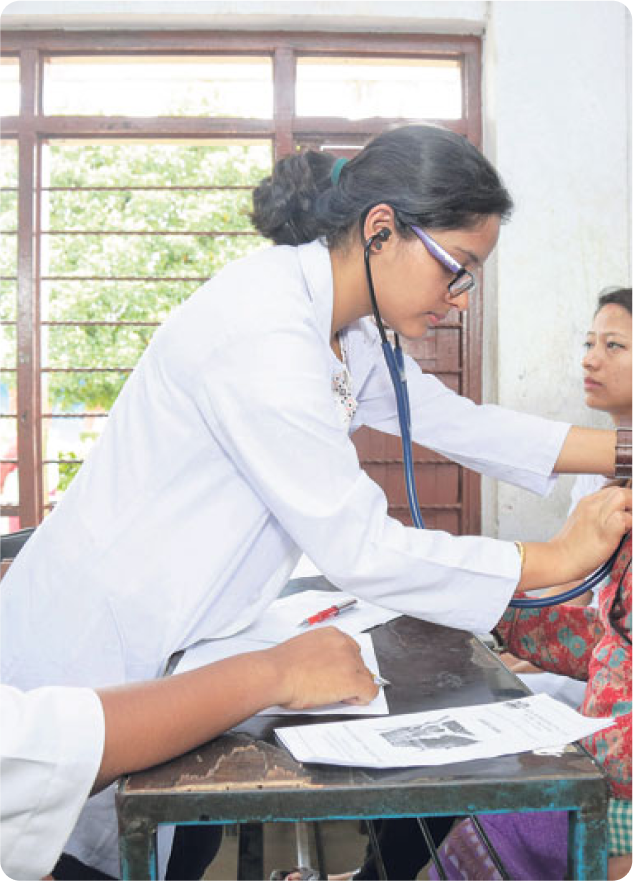


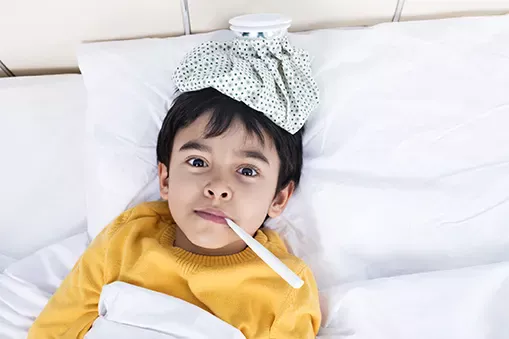

A fever in children means a body temperature of 100.4°F (38°C) or higher, and in most cases it is a sign the immune system is working against an infection, so you treat your child’s comfort first and watch behavior more closely than the number on the thermometer. That single shift in focus saves many families a sleepless night.
Normal body temperature sits around 98.6°F (37°C), and it moves a little through the day. It runs lower in the early morning and higher in the late afternoon. A small jump does not mean something serious is happening.
Fever itself is not an illness. Your child’s brain raises the body’s set point to make life harder for viruses and bacteria, which is why the skin feels hot and the child may shiver as the temperature climbs.
Most fevers come from common infections and settle on their own within a few days. A smaller number need a doctor the same day, and a few need an emergency room right away. By the end of this piece you will know which group your child falls into, how to dose fever medicine safely, and which warning signs mean you stop watching and start driving.
What Temperature Counts as a Fever?
A fever means a body temperature of 100.4°F (38°C) or higher, and the cutoff shifts slightly depending on where you measure.
Where you take the reading changes the number. Use this as your guide:
| Method | Best for | Fever reading |
| Armpit/Rectal | Birth to 3 years | 100.4°F (38°C) or higher |
| Oral (mouth) | Age 4 and up | 100°F (37.8°C) or higher |
| Armpit (axillary) | Quick screening, any age | 99°F (37.2°C) or higher |
| Forehead / temporal | Any age | 100.4°F (38°C) or higher |
A digital thermometer is the only type worth owning. Skip old mercury glass thermometers and skip fever strips, which are too rough to trust.
For babies under 3 months, a rectal thermometer gives the most reliable result, and that number is the one a doctor will ask for. Use a small dab of petroleum jelly, insert about half an inch, and hold your baby still until the beep.
A practical habit from the exam room: write down the temperature, the time, and what your child was doing. Patterns tell a doctor more than one high reading does.
One more point worth repeating. A 103°F fever in a playful, drinking child worries a pediatrician less than a 100.8°F fever in a limp child who will not wake up.
What Causes a Child’s Fever?
Viral infections cause the large majority of fevers in children. Coughs and colds, the flu, stomach viruses, chickenpox, and roseola all raise temperature for two to four days, then fade without any specific treatment.
Bacterial infections cause fewer fevers but need attention sooner. The common ones in children include:
- Ear infections, often after a cold, with ear pulling or night waking
- Tonsillitis and strep throat, with a painful throat and swollen glands
- Urinary tract infections, which can show up as fever with no other clue, especially in babies
- Pneumonia, with fast breathing, a wet cough, or chest pain
Young children catch a lot of these. One referral guideline for clinicians notes that young children average three to six febrile episodes per year, and that most of these are self-limiting viral illnesses. Daycare and older siblings push that count higher.
Vaccinations cause a mild, short fever in some children within a day or two of the shot. This is an expected immune response and settles within 48 hours.
Teething raises temperature only slightly. A reading above 100.4°F in a teething baby deserves a look for another cause.
A few less common causes include heat exhaustion, Kawasaki disease, and inflammatory conditions. These show up with other signs beyond fever, which is why a doctor examines the whole child and not just the temperature. Our paediatrics services team sees this pattern daily during seasonal illness peaks.
How to Care for a Child With a Fever at Home
Treat your child’s comfort, not the number. Johns Hopkins Medicine makes the point plainly: treating your child’s fever will not help the body get rid of the infection any faster; it relieves the discomfort that comes with it.
Fluids come first. Offer small sips often instead of one big glass. Breast milk or formula for babies, water and diluted juice for older children, and an oral rehydration solution if there is vomiting or diarrhea.
Watch for dehydration: fewer wet diapers or fewer bathroom trips, a dry mouth, no tears when crying, or sunken eyes. Counting wet diapers is the simplest home check you have.
Let your child rest and dress them in one light layer. Heavy blankets trap heat. Sweating during a fever is normal, and so are shivering and chills as the temperature rises.
Fever medicine, used safely
| Medicine | Ages | Dose interval |
| Acetaminophen / paracetamol | 3 months and up (younger only on advice) | Every 4 to 6 hours |
| Ibuprofen | 6 months and up | Every 6 to 8 hours |
Dose by your child’s weight, not age, and use the syringe or cup that came in the box. Check the label of every other medicine you give, since many cold products already contain acetaminophen.
Never give aspirin to a child or teen. It is linked to Reye syndrome, a rare condition that damages the brain and liver. Ask your doctor before using ibuprofen if your child has asthma, kidney problems, or is dehydrated.
Skip cold baths and rubbing alcohol. Both cause shivering, which pushes temperature back up.
When Should You Seek Urgent Medical Care?
Go to an emergency room now if your child has a fever plus any of these signs:
- A rash that looks like small bruises or pinpricks and does not fade when you press it
- A stiff neck, severe headache, or pain when looking at bright light
- Difficulty breathing, grunting, fast breathing, or skin pulling in between the ribs
- Lethargy: floppy, hard to wake, or not responding to you normally
- Persistent vomiting that stops fluids going in, or clear signs of dehydration
- A seizure, twitching, or loss of consciousness
- Skin that is pale, mottled, blue, or unusually cold hands and feet with a hot body
- A high-pitched, weak, or continuous cry in a baby
Age changes the threshold. Any fever of 100.4°F (38°C) or higher in a baby under 3 months needs immediate evaluation. Babies this young have immature immune systems and can get sick fast.
Febrile seizures frighten parents more than almost anything else. They affect children between 6 months and 5 years and are triggered by a fast rise in temperature. Lay your child on their side on a soft surface, remove hard objects nearby, note the time, and do not put anything in their mouth. Any first seizure, or one lasting over five minutes, needs emergency care.
Our complete ICU care and intensive care facilities at Primax Hospital handle these emergencies around the clock. If you are in Sonipat and see any red flag above, come straight in.
When to Visit a Doctor for Ongoing or Recurrent Fever
Book a doctor’s visit when a fever lasts more than three days, keeps returning over several weeks, or comes with a symptom that will not settle. Most viral infections break within 72 hours, so a longer fever means it is time for an examination and possibly a urine test or blood work.
Signs that deserve an appointment rather than waiting it out:
- Fever past day three, or fever that returns after your child seemed better
- Ear pain, ear discharge, or a child pulling at one ear
- Painful urination, foul-smelling urine, or fever with no other symptom (a possible urinary tract infection)
- A wet cough with fast breathing, which can point to pneumonia
- A headache that gets worse, or vomiting that keeps coming back
- Poor feeding, weight loss, or joint pain and swelling with the fevers
- Fever in a child with a long-term condition or on medicine that lowers immunity
Repeated fevers in a healthy child are frequently just back-to-back viral infections, especially in the first year of daycare. When they follow a clock-like pattern every three to six weeks, a doctor looks at less common causes, including periodic fever syndromes.
Bring your fever log to the visit. Dates, peak temperatures, how long each episode ran, and what else you noticed give a pediatrician a real head start.
At Primax Hospital on Bahalgarh Road, Sector-4, Sonipat, our pediatrician and neonatologist specialists examine children with prolonged and recurring fevers with on-site lab and imaging support, and families across Sonipat reach us without a referral. Same-day assessment is available.
Frequently Asked Questions
What temperature is a fever in children?
A fever in children is a temperature of 100.4°F (38°C) or higher. Rectal readings are the most accurate for babies under 3 years, while armpit readings register about a degree lower than rectal ones.
Which thermometer should I buy?
A digital thermometer is the right choice for home use. Keep a rectal thermometer for babies under 3 months, since that reading is the one a doctor will rely on, and label it so it is never used in the mouth.
Can I give paracetamol and ibuprofen together?
Give one at a time. Paracetamol (acetaminophen) every 4 to 6 hours or ibuprofen every 6 to 8 hours, dosed by weight, handles most fevers, and combining or routinely alternating them raises the risk of a dosing mistake. Ask your pediatrician before switching between them.
Are febrile seizures dangerous?
Most febrile seizures are brief and do not cause lasting harm. They affect children aged 6 months to 5 years and are set off by a rapid temperature rise, though a first seizure or one lasting more than five minutes always needs emergency assessment.
How long should a child’s fever last?
Most childhood fevers settle within three days. A fever running past 72 hours, returning after improvement, or coming with breathing trouble or lethargy needs a doctor’s review.
When should I take my child to the hospital instead of waiting?
Go immediately for any fever in a baby under 3 months, a non-fading rash, a stiff neck, breathing difficulty, a seizure, or a child you cannot wake properly. For everything else, a same-day appointment works.
For urgent pediatric care in Sonipat, Primax Hospital is at Bahalgarh Road, Sector-4, Sonipat-131001, Haryana. Call +91 96664 60009

