





A fever that keeps coming back or refuses to break after three days is your body telling you something has not been resolved. A fever lasting more than three days, or any fever above 103°F (39.4°C), needs a doctor’s evaluation, because at that point the cause is no longer obvious and blood work plus imaging are what find it. Most short fevers come from a virus and clear on their own. A fever that drags on is a different situation.
Your body temperature rises because your immune system pushes the thermostat in your brain higher to make life harder for germs. That immune response is useful. The problem starts when the trigger does not go away, so the temperature stays up for days or weeks.
Fever symptoms like chills, sweating, and aching muscles tell you the body is working. They do not tell you why. That answer comes from a careful look at your history, your other symptoms, and a few basic tests. Knowing which signs call for medical attention today, and which ones can wait for a clinic appointment, keeps you from either panicking or waiting too long.
When Is a Raised Temperature a Concern?
A temperature is worth acting on when it crosses 100.4°F (38°C) and stays there, or keeps returning, for more than three days. Harvard Health notes that adults usually have a fever when their temperature reaches 100.4°F. Below that, you are in the range of normal daily swings.
There is no single cutoff everyone agrees on. The lower and upper limits for normal temperature between 99.0 and 100.9°F. Your own baseline matters more than the textbook number.
Doctors sort long fevers into a few patterns:
- Persistent low-grade fever: 99°F to 100.3°F that hangs on for days or weeks
- Prolonged fever: a clear fever lasting more than about a week
- Recurring fever: temperature spikes that come and go with normal days in between
- Fever of unknown origin (FUO): fever over 101°F lasting three weeks or more with no cause found after initial testing
Fever in children follows different rules. Any fever in a baby under three months needs same-day care, even a low one. In older children, how the child looks and acts matters as much as the number on the thermometer. A child who is drinking, playing a little, and responding normally at 102°F is less worrying than a listless child at 100.6°F.
Keep a simple log: time, temperature, and how you felt. Doctors rely on that pattern, and most people cannot recall it accurately after a week.
Common Infectious and Noninfectious Causes
Infection is the most common reason a fever lingers, but it is not the only one. The MSD Manual groups fever causes into infectious (most common), neoplastic, and inflammatory categories, and notes that when fever comes from a noninfectious cause, it is almost always chronic or recurrent.
Infections that commonly cause a fever to drag on:
- Viral infections: the common cold, flu, COVID-19, and other respiratory infections
- Bacterial infections: pneumonia, sinusitis, urinary tract infection (UTI), strep throat
- A hidden abscess (a walled-off pocket of pus) in a tooth, the abdomen, or under the skin
- Tuberculosis, which can cause weeks of low-grade fever with night sweats
- Malaria, in anyone who has traveled to a region where it spreads
- A secondary infection layered on top of a viral illness that seemed to be improving
Noninfectious causes worth checking:
| Category | Examples |
| Autoimmune disease | Rheumatoid arthritis, lupus, juvenile idiopathic arthritis |
| Inflammatory bowel disease | Crohn’s disease, ulcerative colitis |
| Hormonal | Hyperthyroidism, thyroiditis, hormonal changes |
| Medication related | Drug fever or drug-induced fever from antibiotics and other drugs |
| Blood and cancer | Lymphoma, leukemia, other cancers |
Stress plays a real but smaller role. Severe emotional or physical stress can trigger psychogenic fever or lower your resistance to repeat infections. Dehydration raises your temperature reading too, and poorly controlled diabetes makes infections both more likely and slower to clear.
Repeated fevers after courses of antibiotics sometimes point toward antibiotic resistance or a wrong first diagnosis.
When to Seek Urgent or Emergency Care
Go to an emergency department the same hour if a fever comes with any of these signs. They point toward a serious infection such as meningitis, sepsis, or a lung problem, and none of them improve with waiting.
Emergency signs:
- Difficulty breathing or fast, shallow breaths
- Chest pain
- Stiff neck with a severe headache or light sensitivity
- Confusion, unusual sleepiness, or trouble waking up
- Seizures
- A rash that spreads quickly or does not fade when you press it
- Persistent vomiting, or no urine for 8 to 12 hours
- Fever above 104°F that does not drop with medication
Complete ICU care and intensive care facilities matter in exactly these cases, where minutes of delay change the outcome. Our team keeps intensive care beds and monitoring staffed around the clock for patients who arrive in this condition.
Book a clinic or urgent visit within a day or two for a fever that has passed three days along with a stubborn cough, sore throat, ear pain, burning urine, or sinus pressure.
Stable fever with a likely local infection is the right fit for a same-day appointment.
Some symptoms deserve attention even when the fever itself is mild. Swollen lymph nodes that keep growing, drenching night sweats, unexplained weight loss, or fatigue that stops you working all suggest something beyond a passing virus and call for a proper medical evaluation.
Lower your threshold for seeking care if you are pregnant, over 65, on chemotherapy or steroids, or living with diabetes, heart disease, or kidney disease.
What to Expect During Medical Evaluation
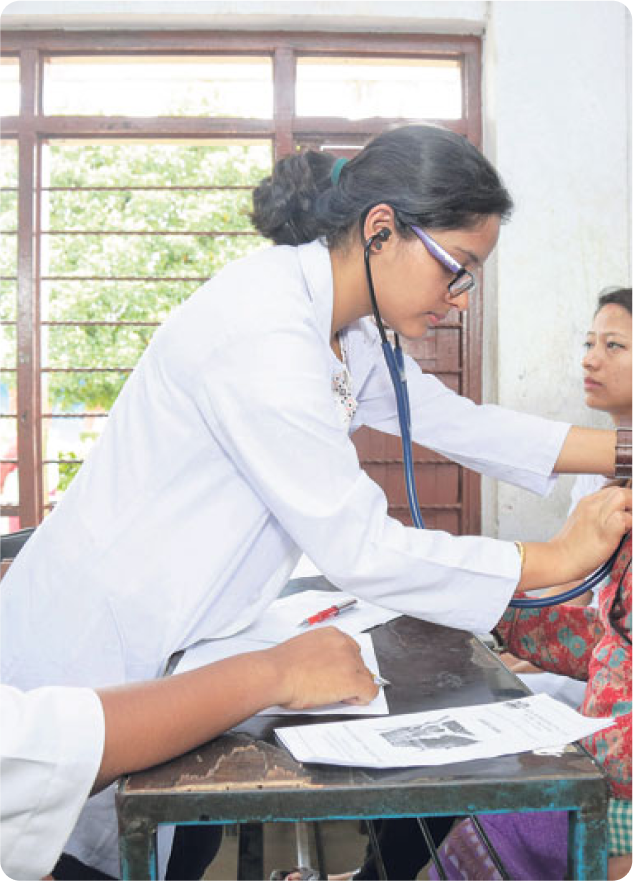
The visit starts with talking, not testing. Your doctor takes a medical history covering how long the fever has lasted, its daily pattern, recent travel, animal contact, medications, dental work, and any weight loss or sweats. This conversation narrows the list more than any single test.
A physical examination follows: throat, ears, chest, abdomen, skin, joints, and lymph nodes. Doctors may order tests such as blood tests or a chest X-ray based on your history and exam rather than running everything at once.
Common first-round tests include:
- Complete blood count (CBC) to look at white cells, red cells, and platelets
- CRP or ESR to measure inflammation
- Urine sample for urine analysis and culture, which catches a urinary tract infection even without burning
- Blood cultures when a bloodstream infection is suspected
- Chest X-ray for pneumonia or tuberculosis
- Ultrasound of the abdomen to look for an abscess, gallbladder problem, or enlarged organs
If those come back clean and the fever continues, testing widens toward autoimmune conditions, CT scans, and specialist referral. This is the fever of unknown origin pathway, and it takes patience. Our radiology and imaging services and in-house lab let most of these steps happen in one or two visits instead of over several weeks.
Bring your temperature log, a list of every medicine and supplement you take, and any earlier test reports. Patients who arrive with those three things reach a diagnosis faster.
Relieving Discomfort While the Cause Is Assessed
Treat the discomfort, not the number. Rest and hydration do most of the work while testing goes on, and fever medicine is there to help you sleep, eat, and move rather than to force the thermometer down to 98.6°F.
Fluids first. Fever and sweating pull water out of you, and dehydration makes headaches, weakness, and dizziness worse. Aim for clear urine and sip steadily rather than drinking a lot at once.
Medication basics for adults:
| Medicine | Notes |
| Acetaminophen | Easier on the stomach; do not exceed the daily limit on the label |
| Ibuprofen | Take with food; avoid with kidney disease, ulcers, or dehydration |
Never combine several over-the-counter medications that both contain acetaminophen, which is easy to do with combination cold products.
For fever in children, dose by weight and not by age, and skip aspirin entirely. Comfort is the goal: a child who is drinking and resting well does not need medicine for every rise in temperature.
Cool comfort measures help with chills, sweating, body aches, and a runny nose. Dress in one light layer, keep the room at a normal temperature, and use a lukewarm sponge bath if the heat feels unbearable. Cold baths and alcohol rubs cause shivering, which raises temperature again.
Antibiotics treat bacterial infections only. Taking leftover antibiotics for an undiagnosed fever masks symptoms, muddies test results, and builds resistance.
Frequently Asked Questions
How long can a persistent fever last before it is serious?
A fever lasting more than three days warrants a medical visit, and one lasting over a week needs blood work and imaging. Length alone tells you to investigate; the cause could be anything from a sinus infection to an autoimmune condition.
Can a persistent low grade fever be nothing?
Yes, a mild temperature of 99°F to 100.3°F sometimes follows a recent viral illness, ovulation, or teething in toddlers and clears on its own. Get it checked if it lasts beyond two weeks or comes with weight loss, night sweats, or swollen lymph nodes.
When should I worry about fever in children?
Seek same-day care for any fever in an infant under three months, a fever over 104°F at any age, or a fever lasting more than three days. Also go in if your child is unusually drowsy, refuses fluids, has a spreading rash, or is breathing hard.
Can stress cause a fever that keeps returning?
Severe emotional or physical stress can trigger psychogenic fever and weaken your defenses against repeat infections. Doctors rule out infection, inflammation, and other medical causes before settling on stress as the explanation.
Should I take antibiotics for a fever that will not go away?
No, not without a diagnosis. Antibiotics do nothing for viral fevers, and taking them blindly can hide the real cause and make future infections harder to treat.
Where can I get a persistent fever checked in Sonipat?
Primax Hospital runs a full diagnostic setup with internal medicine, pediatrics, and imaging on one campus, serving patients across Sonipat. Walk in at Bahalgarh Road, Sector-4, Sonipat-131001, Haryana, or call +91-96664-60009 to book an evaluation today.

